The Science of Gears: Mastering Torque, Speed, and Mechanical Advantage
In the intricate tapestry of engineering, few components are as ubiquitous and fundamental as the gear. From the gentle hum of a wristwatch to the formidable roar of industrial machinery, gears are the unsung heroes translating raw power into controlled motion. These rotating circular machine parts, characterized by their precisely cut teeth, orchestrate a delicate dance of force and speed, allowing us to manipulate the very physics of mechanical advantage. Understanding the science behind gears is not just about appreciating their design; it's about unlocking the potential to transmit motion, multiply torque, and fine-tune rotational speed across countless applications.
What Exactly is a Gear? Deconstructing the Toothed Wheel
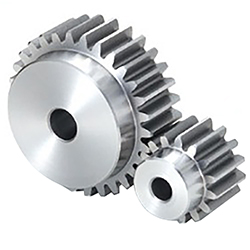
At its core, a gear, also known as a gearwheel or toothed wheel, is a mechanical component designed to transmit rotational motion and torque. Its distinctive feature is a series of uniformly spaced teeth that engage with compatible teeth of another gear or a different toothed part. This meshing action is the bedrock of its functionality, enabling efficient power transfer without slippage, unlike friction-based drives.
The terminology associated with gears can be quite specific. When two or more gears mesh together, they form a gear train. The smaller gear in a meshing pair is often referred to as the pinion. Sometimes, gears with separate pegs inserted for teeth are called cogwheels, with each peg being a 'cog'. While most gears are round and designed for smooth, continuous operation, the engineering landscape also features specialized designs like non-circular gears or the Geneva drive, which are intentionally engineered for intermittent or uneven motion, serving unique functional requirements.
It's important to differentiate gears from similar components. A sprocket, for instance, looks like a gear but is specifically designed to engage with a link chain, commonly seen on bicycles or motorcycles. Similarly, a timing pulley, while toothed, works in conjunction with a timing belt, often found in engines to synchronize rotational components. Each serves a distinct purpose within mechanical systems, highlighting the precision in mechanical engineering design. For a deeper dive into the fundamental components and functions, you might find Understanding Gears: How Toothed Wheels Drive Mechanical Motion particularly insightful.
The Core Mechanics: Torque, Speed, and Mechanical Advantage Explained
The true genius of the gear lies in its ability to manipulate fundamental mechanical principles, primarily that of the lever. Imagine a gear as a continuous series of levers working in unison. When a smaller gear drives a larger gear, a crucial exchange occurs: rotational speed decreases, but torque—the rotational force—increases. Conversely, if a larger gear drives a smaller one, speed increases at the expense of torque. This ability to trade torque for speed (or vice-versa) is what grants gears their profound mechanical advantage.
This relationship is quantified by the gear ratio (r), which is simply the ratio of the tooth counts of the driven gear (N2) to the driving gear (N1): r = N2 / N1. This ratio directly dictates the changes in torque and speed:
- Torque Transformation: The torque of the driven gear (T2) relative to the driving gear (T1) is directly proportional to the gear ratio: T2 / T1 = r. A higher gear ratio means a significant increase in output torque.
- Speed Transformation: The rotational speed (angular velocity, ω) of the driven gear (ω2) relative to the driving gear (ω1) is inversely proportional to the gear ratio: ω2 / ω1 = 1 / r. So, a higher gear ratio results in a slower output speed.
Beyond simply changing magnitude, gears can also be arranged to change the axis of rotation or even invert the sense of rotation (e.g., from clockwise to counter-clockwise). Another fascinating application is the rack and pinion system, where a straight bar with teeth (the rack) meshes with a circular gear (the pinion) to convert rotational motion into linear motion, or vice-versa, commonly found in steering systems.
Understanding these principles is key to designing systems that optimize power usage. For example, lifting a heavy object requires high torque at low speed, a task perfectly suited for a large driven gear. Moving a light object quickly demands high speed and less torque, achievable with a small driven gear. It's a fundamental concept that underpins efficiency in everything from bicycles to wind turbines.
The Versatility of Gears: From Micromachines to Mining Giants
The sheer diversity of gears is a testament to their adaptability and indispensable role in technology. They are among the most common mechanical parts, manifesting in an astonishing variety of shapes, sizes, and materials to suit an endless array of functions and applications.
Consider the scale: gear diameters can range from mere micrometers (μm) in precision micromachines and intricate medical devices, to a few millimeters in the delicate mechanisms of watches and children's toys, all the way up to colossal sizes exceeding 10 meters in heavy industrial equipment like those found in mining operations or hydroelectric dams. This incredible range highlights the precision engineering required at both ends of the spectrum.
Materials are just as varied, including steel, brass, bronze, plastics, and even exotic alloys, chosen for properties like strength, wear resistance, weight, and corrosion resistance specific to the operating environment. The design of their teeth—spur, helical, bevel, worm, etc.—further customizes their interaction for specific types of motion, load capacities, and noise considerations.
Historically, gears have driven innovation for millennia. Their lineage dates back over 5,000 years, with early forms found in ancient Chinese chariots. The brilliance of ancient Greek engineers like Archimedes in the 3rd century BCE propelled gear technology forward for applications such as water pumps and siege engines. A truly remarkable artifact, the Antikythera mechanism from roughly 80 BCE, stands as a testament to early complex gear trains, functioning as an astronomical analog computer. This rich heritage underscores their enduring importance in human ingenuity. To explore this fascinating journey, delve into Gears Through Time: A 5,000-Year History of Engineering Innovation.
Gears in Action: Understanding Transmissions and Gearboxes
Perhaps one of the most familiar and complex applications of gears is within the realm of vehicle transmissions, often referred to as gearboxes. These sophisticated assemblies contain multiple sets of gears that can be selectively engaged in various configurations. The primary function of a gearbox in a vehicle is to allow the operator to vary the amount of torque applied to the wheels without needing to constantly change the engine's rotational speed.
Think about driving: when you start from a standstill or climb a steep hill, you need significant torque to overcome inertia and gravity. This is achieved by selecting a 'low gear' ratio, where the engine's relatively high speed is converted into high torque and low wheel speed. Conversely, when cruising on a highway, you need less torque but higher wheel speed for efficiency, which is provided by a 'high gear' ratio. The gearbox effectively optimizes the engine's power output for varying driving conditions, enhancing fuel efficiency and performance.
Beyond vehicles, gearboxes are integral to a vast array of other machines. They are found in industrial equipment like lathes, where they control the precise speed of cutting tools or workpieces, and in conveyor belts, regulating the speed at which materials are transported. Agricultural machinery, wind turbines, robotics, and even household appliances like washing machines and blenders all rely on meticulously engineered gearboxes to achieve their designed functions. The ability to select different gear ratios within a transmission allows for unparalleled control over speed, torque, and ultimately, the efficient utilization of mechanical power.
Practical Tip: When operating any machine with a gearbox, always refer to the manufacturer's guidelines for optimal gear selection. Using the wrong gear for the task can lead to excessive wear, reduced efficiency, or even damage to the system. Understanding the trade-off between torque and speed will empower you to make more informed decisions, whether you're shifting gears in your car or adjusting settings on industrial equipment.
Conclusion
From their ancient origins to their role in cutting-edge modern technology, gears stand as a monument to engineering ingenuity. These deceptively simple toothed wheels are the fundamental building blocks that allow us to precisely control motion, multiply force, and manage speed across an incredible spectrum of applications. Whether silently turning the hands of a clock or powerfully driving massive machinery, the science of gears – mastering torque, speed, and mechanical advantage – remains an essential principle, continuously refined and innovated, ensuring their enduring relevance in the relentless march of mechanical progress.